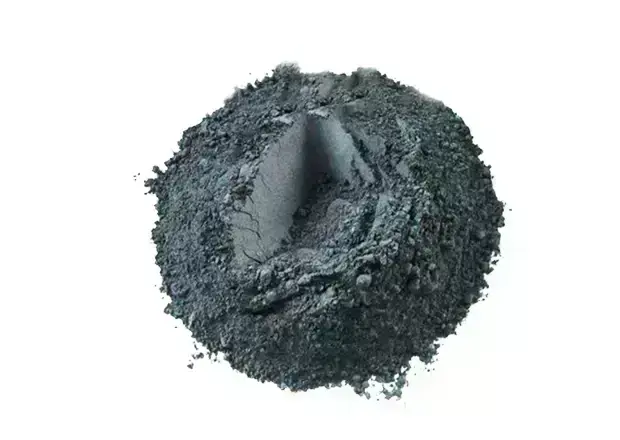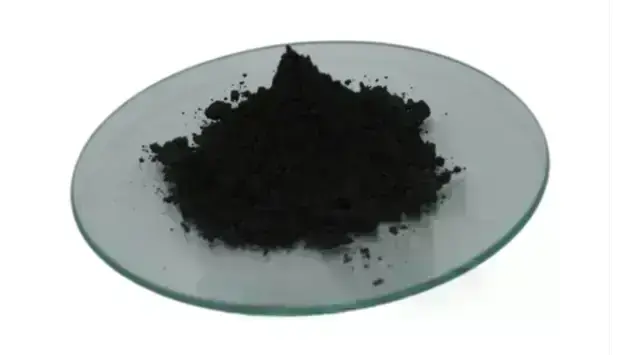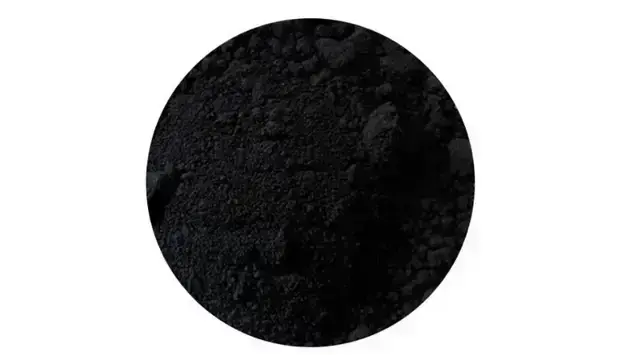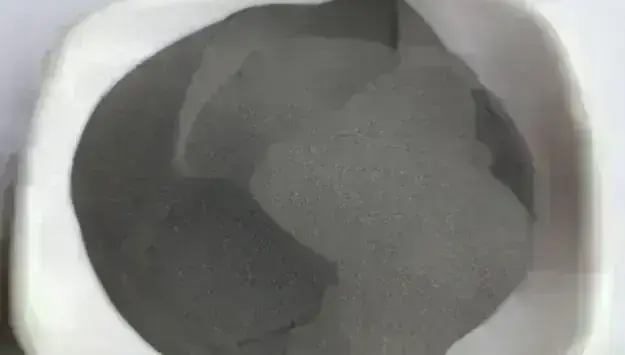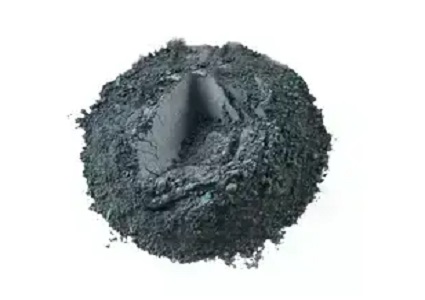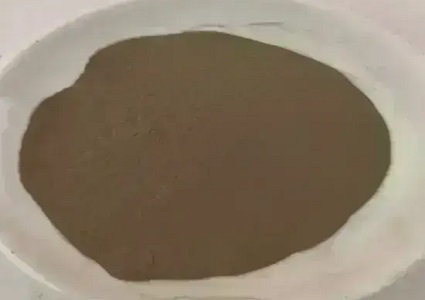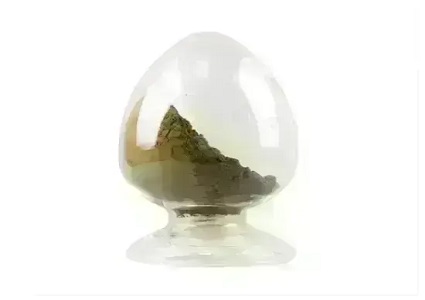
Titanium carbide (TiC) is a highly hard (with a Mohs hardness rating of 9-9.5) ceramic material that is refractory and bears similarity to tungsten carbide. It manifests as a black powder and has a crystal structure akin to sodium chloride (face-centered cubic). In its natural form, the size of its crystals ranges between 0.1 and 0.3 millimeters.
Purity: 99.0%-99.9%
Specifications: -325 mesh (14 micrometers aps), etc., customizable
CAS: 12070-08-5
Chemical Name: Titanium Carbide
Chemical Formula: TiC
CAS Number: 12070‑08‑5 (also seen as 12070‑08‑5)
Appearance: Black to dark grey crystalline powder
Crystal Structure: Face‑centered cubic (NaCl‑type)
Density (Theoretical): ~4.93 g/cm³
Melting Point: Approximately 3,140 °C (some sources list up to ~3,160 – 3,200 °C)
Boiling Point: Approximately 4,820 °C (lit.)
Purity Grades: Common high‑purity levels ≥ 99.5% to ≥ 99.9% (trace metal basis)
Particle Size / Size Distribution Options: Available in multiple grades — e.g., D50 ~0.8‑1.0 µm, 1–3 µm, nano (<100 nm) or custom mesh (-100 +325 mesh) depending on supplier.
Typical Applications: Hard coatings, cermet composites, wear‑resistant parts, cutting tools, high‑temperature ceramics, thermal spray powders.
Packaging & Handling: Usually supplied in sealed bags/drums, stored in dry, inert or controlled‑humidity conditions to preserve powder quality. (Specific packaging may vary by supplier.)
Key Notes for Buyers
High Hardness & Wear Resistance: TiC is among the hardest carbides (Mohs hardness ~9‑9.5) offering excellent abrasion resistance.
Refractory and High‑Temperature Capability: With melting points over 3,000 °C and good thermal stability, TiC is suitable for demanding thermal environments.
High Purity and Particle Control: For thin coatings, additive manufacturing, or cermet applications, tight control of purity, PSD (particle size distribution), and morphology matter significantly—impurities or oversized particles can impact sintering behavior or film quality.
Customization Available: Many suppliers offer tailored grades (particle size, purity, morphology) to match specific processes such as thermal spray, PVD feedstock, or sintering additive.
Compatibility with Composites: TiC blends well into cermets and hard‑facing alloys, often used as an additive or base material for high‑speed tooling, heavy‑duty wear surfaces, or thermal barrier systems.
Titanium carbide powder is highly prized for its exceptional combination of hardness, thermal robustness, and chemical stability — making it ideally suited to demanding high‑performance environments. With a melting point approaching ~3,100 °C and a density of ~4.93 g/cm³, TiC provides structural integrity and durability where many ceramics or metals begin to fail.
From a wear and abrasion resistance standpoint, TiC is among the hardest commercially available compounds (Mohs hardness ~9–9.5) and exhibits excellent performance in wear‑resistant coatings, cutting tools, and refractory composites. Its capacity to retain mechanical strength under elevated temperatures and hostile environments is a core advantage for tooling, hard facing, and high‑temperature structural components.
In addition, TiC powder offers advantageous electrical and thermal conductivity for a ceramic material, enabling its use not only in mechanical applications but also in functional coatings, conductive ceramics, and hybrid material systems. Its compatibility with deposition techniques, powder metallurgy, and additive manufacturing processes further enhances its versatility.
Moreover, thanks to modern production and engineering, high‑purity TiC powders are now available with controlled particle size distributions, minimal impurity levels, and tailored morphologies. This enables finer microstructures, better sintering behavior, improved film deposition, and more consistent performance in end‑use applications — from thin film PVD coatings to composite reinforcement.
Overall, Titanium carbide powder represents a strategic material choice for manufacturers and engineers seeking outstanding hardness, high‑temperature stability, mechanical and thermal resilience, and functional flexibility across wear‑resistant, coating, structural, and composite systems.
Titanium carbide is utilized in creating cermets, which are frequently employed in the high-speed machining of steel.
Additionally, it serves as a coating that resists wear on metal parts, including tool drills and the mechanisms of watches.
Moreover, titanium carbide is used as a coating that provides thermal protection for spacecraft during re-entry into the atmosphere.
Contact With Us:
E-mail: export@zhiyueltd.com
Have a Questions? Call Us:
Add:
RM.1624. Block A. Ming Feng Bo Ma Dou, Cross of Ming Guang Road and Shang Xin Road, Xi'an Economic and Technological Development Zone, Shaanxi Province, China